Прерывание процесса в Mac OS
Когда вы работаете на Mac OS, иногда может возникнуть ситуация, когда вам необходимо завершить процесс. Это может быть связано с тем, что программа не отвечает, работает слишком медленно или вы просто хотите закрыть ее. В этом пошаговом руководстве мы покажем вам, как легко завершить процесс на Mac OS и вернуться к продуктивной работе.
Первый шаг заключается в открытии «Диспетчера задач» — это инструмент, который позволяет управлять запущенными процессами на вашем компьютере. Для этого вы должны нажать клавишу Command + Пробел на клавиатуре, чтобы открыть поисковую строку Spotlight. Затем введите «Диспетчер задач» и выберите его из списка результатов.
После открытия «Диспетчера задач» вы увидите список всех активных процессов на вашем компьютере. Чтобы завершить процесс, выберите его в списке и нажмите кнопку «Завершить процесс». Если программа не отвечает, вы также можете использовать комбинацию клавиш Command + Option + Escape, чтобы быстро открыть «Диспетчер задач» и выбрать процесс для завершения.
Если вам необходимо завершить несколько процессов одновременно, вы можете выбрать их все в списке и нажать кнопку «Завершить процесс» для одновременного завершения. Однако будьте осторожны при завершении процессов, поскольку это может привести к потере несохраненных данных в работающих программах. Внимательно проверьте, какие процессы нужно завершить, и убедитесь, что вы предупредили о возможных последствиях.
Завершение процессов на Mac OS — это просто и быстро. Следуя этому пошаговому руководству, вы сможете эффективно управлять активными процессами на вашем компьютере и вернуться к продуктивной работе.
Но помните, что завершение процессов — это крайняя мера, и в большинстве случаев проблемы можно решить без завершения процессов. Если у вас возникают постоянные проблемы с определенной программой, рекомендуется выполнить обновление или переустановку этой программы, чтобы устранить возможные ошибки. Также не забывайте регулярно сохранять свою работу, чтобы избежать потери данных в случае завершения процесса или сбоя системы.
Откройте панель приложений
Панель приложений на вашем Mac позволяет быстро переключаться между активными программами и закрыть ненужные приложения. Вот как ее открыть:
Шаг 1: Находите иконку «Dock» в нижней части экрана. Это полоска с иконками различных приложений.
Шаг 2: Если иконок на панели больше, чем видно на экране, прокрутите панель влево или вправо, проведя по ней пальцем или нажав на стрелки рядом с иконками.
Примечание: Если панель приложений находится на другом краю экрана, измените ее положение в настройках системы, чтобы она была видна внизу экрана.
Найдите нужное приложение
Когда вам необходимо завершить процесс на Mac OS, первым шагом будет найти нужное приложение. Есть несколько способов это сделать:
1. Док
На вашем рабочем столе нижняя панель называется Док. В Доке вы можете найти значки всех открытых приложений и текущих процессов. Прокрутите Док, чтобы найти нужное вам приложение, ищите по его значку.
2. Программа «Деятельность Монитора»
Другой способ найти нужное приложение — использовать программу «Деятельность Монитора». Откройте программу и найдите нужный процесс в списке. Программа «Деятельность Монитора» также позволяет завершить процесс непосредственно из приложения.
3. Меню «Force Quit»
Меню «Force Quit» отображает список всех открытых приложений. Для получения к нему доступа, нажмите Command + Option + Escape на клавиатуре. Выберите нужное приложение из списка и нажмите «Force Quit» для его завершения.
Теперь, когда вы нашли нужное приложение, вы готовы приступить к завершению его процесса. Далее в статье мы рассмотрим этот процесс более подробно.
Зависла программа на Mac, как принудительно закрыть (завершить процесс): 3 способа
В случае подвисания какого-нибудь приложения на Mac необходимо принудительно его завершить. Это поможет быстро закрыть программу или перезагрузить её, позволив избежать перезагрузки всей системы macOS. В данном материале мы расскажем о всех основных способах принудительного завершения приложений и фоновых процессов на Mac.

Существует три основных способа принудительного завершения приложений на Mac:
«Завершить принудительно…»
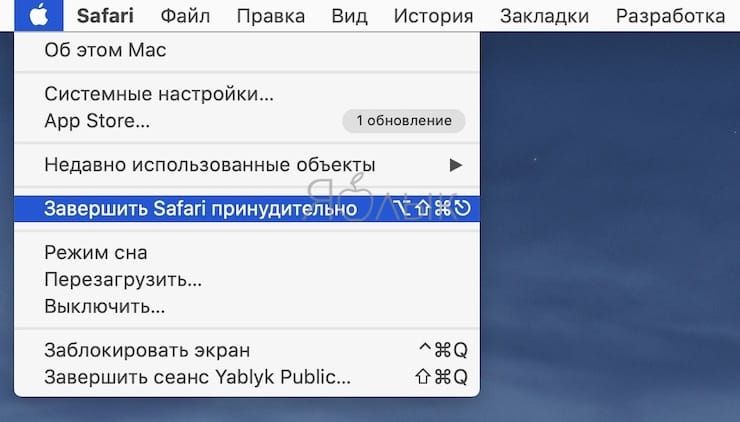
Самый простой способ быстро закрыть приложение — пройти в меню и нажать пункт «Завершить принудительно…». Это меню быстро открывается сочетанием клавиш ⌘Cmd + ⌥Option (Alt) + Esc.
Далее останется выбрать необходимую игру или программу и нажать кнопку «Завершить».
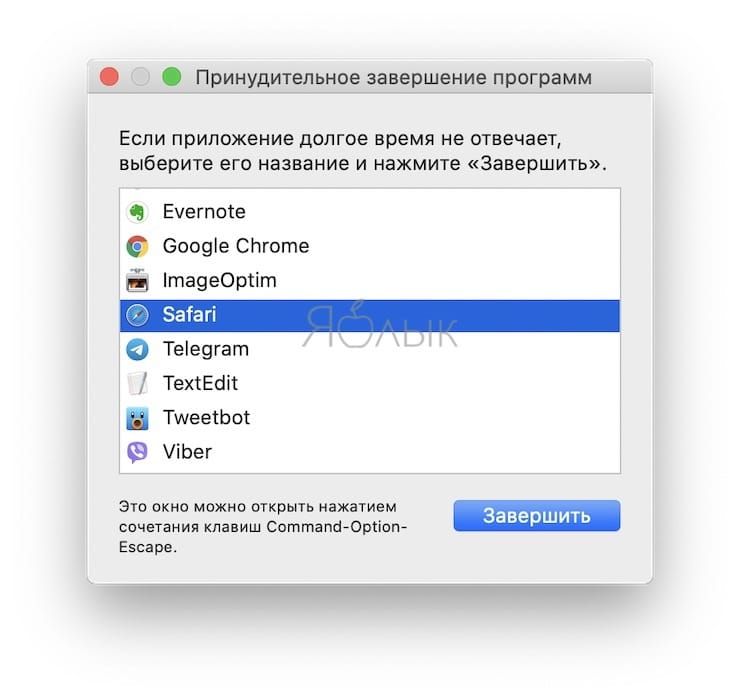
Главный недостаток способа заключается в том, что при помощи этой системной утилиты нельзя закрывать фоновые процессы, которых в macOS очень и очень много.
В некоторых случаях вызвать пункт «Завершить принудительно» можно правой кнопкой мыши по иконке приложения в Доке.
Мониторинг системы
Куда более интересным способом является использование системной утилиты «Мониторинг системы». Открыть её можно перейдя в Finder → Программы → и, или же просто введя в поиск Spotlight соответствующий запрос.
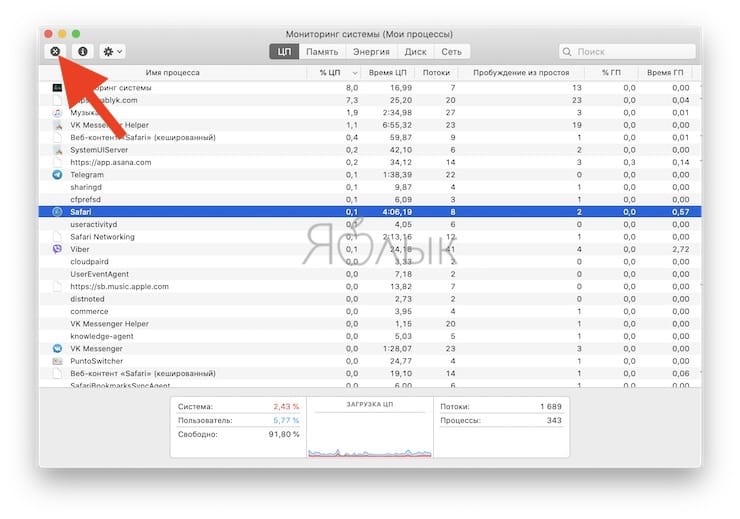
Закрыть приложение или процесс очень просто — достаточно выделить нужную строчку и нажать кнопку с изображением крестика в левом верхнем углу.
В появившемся диалоговом окне останется выбрать способ закрытия — обычный (сохраняются все данные и приложение закрывается штатно) или принудительный, который подойдёт для подвисших приложений.

Главное преимущество утилиты «Мониторинг системы» в том, что тут отображаются не только активные игры и программы, но и системные процессы, фоновые задачи и даже приложения, запущенные на других учётных записях этого Mac (разумеется, поддерживается и управление этими процессами из учётной записи администратора без ввода пароля от второстепенной учётной записи).
Терминал
Более сложный для рядовых пользователей Mac способ, но от этого не менее эффективный. Любой программист сможет при помощи Терминала закрыть процесс или задачу в разы быстрее.
1. Откройте Терминал (Finder → Программы → Утилиты или через поиск Spotlight).
5 ways to force quit applications on Mac

Having spent some years coding applications for macOS, we’ve created a tool that everybody can use. The all-round problem fixer for Mac.
So here’s a tip for you: Download CleanMyMac to quickly solve some of the issues mentioned in this article. But to help you do it all by yourself, we’ve gathered our best ideas and solutions below.
Features described in this article refer to the MacPaw site version of CleanMyMac X.
Do you encounter a frozen app on your Mac and can’t quit it normally? That spinning beach ball makes you crazy? Instead of just sitting and getting more frustrated, force quit an app that’s not responding. Thankfully, you’ve got options to close the unresponsive apps.
We’ve prepared five Mac force quit ways, so you can pick the one that works best for you. Moreover, we’ll tell you how to prevent the apps from hanging and what to do if force quit isn’t working on a Mac.

1. How to force quit from the Apple menu
Here’s how to force quit an app from the Apple menu:
- Click on the Apple logo in the top left corner of your screen.
- Select Force Quit.
- Choose the app that’s not responding.
- Click on the Force Quit button.

2. How to force quit apps with a click— CleanMyMac X
A smart maintenance app like CleanMyMac X has a problem of force quit on Mac covered. You can easily force quit a program on your Mac with its Menu app. To access it, click on a little iMac icon in the menu bar. It has a special Memory tab that allows to identify apps consuming too many resources and quit it with a click.

This helpful utility tool also helps you force quit hung applications. Direct access saves you time and allows to fix a frozen app in a matter of seconds. CleanMyMac also takes care of other performance issues, so if you want to get alerts when something goes wrong on your Mac, you can download its free version and give it a try. To use the Menu app, all you have to do is Enable Menu from CleanMyMac X Settings.
3. How to force quit from the Dock
If you wonder how to force quit an app on Mac using the Dock, check out these simple steps:
- To open the dock menu, right-click on the application icon you want to shut down or click on the item and hold.
- Hold an Option (Alt) button, so the Quit menu changes to Force Quit.
- Click Force Quit.

As simple as that!
4. How to force quit using the keyboard shortcut
Alternatively, you can use a force quit Mac shortcut to close an unresponsive app. Do the following:
- Press and hold the following keys: Command + Option + Esc.
- Select the app you want to quit from the dialogue box.
- Click Force Quit.

This method of force quit command Mac is especially useful if your mouse cursor is lagging a bit.
5. How to force quit using the Terminal
If you prefer a command line method to solve the problems, you can quit an unresponsive app via Terminal. Here’s what you should do:
- Open the Terminal.
- Type the following command: killall [application name] (for example, if Spotify isn’t responding, type killall Spotify in the window that opened).
- Press Return. Your application will be shut down immediately.

If an app’s name consists of more than 2 words (like “Google Chrome”), you should put its name in quotation marks.
Note that the killall command works at the system level, and the autosave option doesn’t work. Be careful not to lose your unsaved data.

What to do if force quit isn’t working on a Mac
In most cases, you’d easily force quit an app with one of the tips we recommend. However, on rare occasions, it won’t work. To solve the problem, you need to shut down your computer and boot it again. All you need to do is go to the Apple menu and select Restart.

If your Mac has frozen and doesn’t restart, here’s how to force reboot it:
- Hold down the power button until your Mac shuts down completely. This may take about 5 seconds.
- Wait for a few seconds and then hit the Power button again to boot the Mac.
As you may presume, this method is not perfect. Any unsaved information may be lost due to the sudden shutdown. However, sometimes it’s the only way to make your computer running.

Fixing an app that hangs frequently: short tips
You may notice that a particular app freezes quite often. It is natural to assume that there is something wrong with that application. But don’t worry; there are a few things you can do to fix the hanging app.
First of all, update an app to the latest version. App developers are constantly working on improvements, trying to deliver the best experience to users. The latest update may resolve all problems with the freezing app.
The next step is to clear the app’s cache, especially if you use it frequently. If there’s not enough free storage, an app won’t run smoothly. Once you delete the cache files, an app may start working normally.
You may also try to delete an app and reinstall it. Usually, it resolves the problem of a frozen app. However, an easier way to do it is to reset an app using CleanMyMac X and the Uninstaller module that comes with this utility. It will bring the app you reset to the state it was in when you first installed it on your Mac, meaning that all the cache files will be deleted, and you will not have to reinstall it.
To reset an app with CleanMyMac X, follow these steps:
- Open CleanMyMac X (or download it for free here if you haven’t yet and install the app).
- From the sidebar, go to Uninstaller.
- Control-click the app you want to reset and click “Select “[App name]” for Reset.”
- Click Reset.
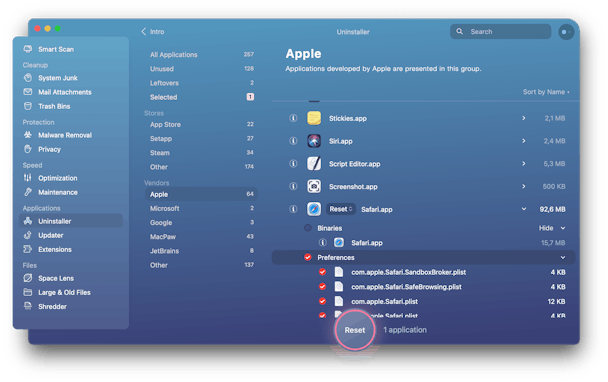
Note that when you first open CleanMyMac X, you may not see apps that are preinstalled with macOS, such as Safari, on the list. To be able to select them for reset, click CleanMyMac X in the menu bar and select Settings. Now, navigate to Ignore List > Uninstaller and deselect Ignore system applications. Now, you’ll be able to reset all the applications you have on your Mac.
That’s it. We hope this guide has helped you force close Mac app that’s not responding. Keep in mind that with regular maintenance, your computer will be in tip-top shape, running at its best. And software like CleanMyMac X can help you keep an eye on your Mac. It can reset and delete apps, free up RAM, clean up the system, take care of the startup programs that slow down your computer, and speed up your Mac with its maintenance tools. And that’s what will help you avoid problems with frozen apps on your Mac.
How to kill a process in MacOS?
If you’re trying to kill -9 it, you have the correct PID, and nothing happens, then you don’t have permissions to kill the process.
Solution:
Okay, sure enough Mac OS/X does give an error message for this case:
So, if you’re not getting an error message, you somehow aren’t getting the right PID.

Some cases you might want to kill all the process running in a specific port. For example, if I am running a node app on 3000 port and I want to kill that and start a new one; then I found this command useful.
Find the process IDs running on TCP port 3000 and kill it

If you know the process name you can use:
(Replacing "Dock" with the process name.) If you don’t know the name of the process, you can open Activity Monitor and find it.
You can list the process using a port with command lsof , for example:
Replace the word PORT_NUMBER_HERE to the port number that you are using, then the process running on the port will be listed. Then you just have to kill the process ID founded like this:
Where PID_NUMBER is the process ID running on the port.

If kill -9 isn’t working, then neither will killall (or even killall -9 which would be more «intense»). Apparently the chromium process is stuck in a non-interruptible system call (i.e., in the kernel, not in userland) — didn’t think MacOSX had any of those left, but I guess there’s always one more:-(. If that process has a controlling terminal you can probably background it and kill it while backgrounded; otherwise (or if the intense killing doesn’t work even once the process is bakcgrounded) I’m out of ideas and I’m thinking you might have to reboot:-(.
I just now searched for this as I’m in a similar situation, and instead of kill -9 698 I tried sudo kill 428 where 428 was the pid of the process I’m trying to kill. It worked cleanly for me, in the absence of the hyphen ‘-‘ character. I hope it helps!

Given the path to your program, I assume you’re currently running this under Xcode, and are probably at a debug breakpoint. Processes cannot be killed in this state because of the underlying implementation of breakpoints.
The first step would be to go to your Xcode process and stop debugging. If for some strange reason you have lost access to Xcode (perhaps Xcode has lost access to its gdb sub-process), then the solution is to kill the gdb process. More generally, the solution here is to kill the parent process. In your case this is PID 811 (the third column).
There is no need to use -9 in this case.
I have experienced that if kill -9 PID doesn’t work and you own the process, you can use kill -s kill PID which is kind of surprising as the man page says you can kill -signal_number PID .
in the spotlight, search for Activity Monitor. You can force fully remove any application from here.