Как работают маленькие, но супермощные GAN-зарядки для iPhone и Mac. За ними будущее
 В закладки
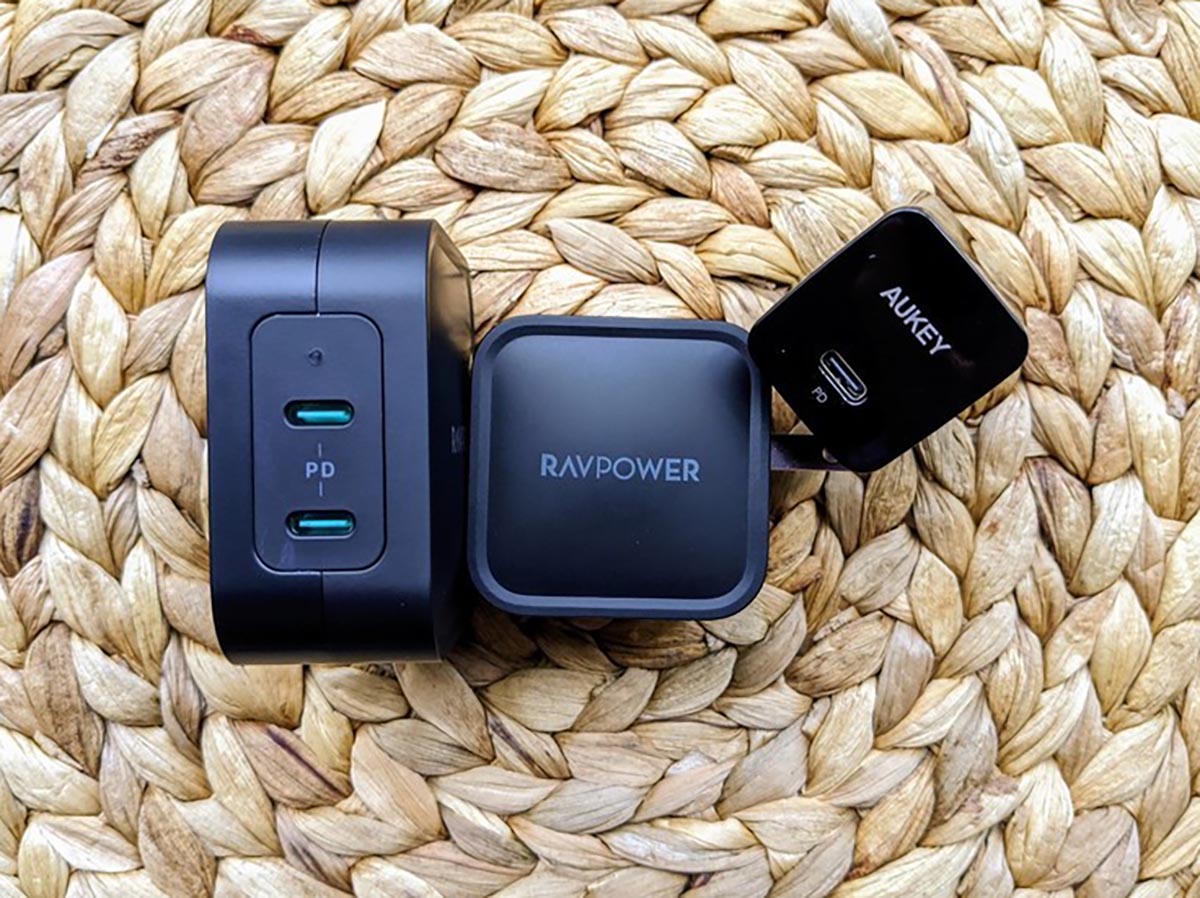
Совсем недавно практически все айфоны комплектовались устаревшей и достаточно скромной зарядкой мощностью 5 Вт. Чтобы полностью зарядить современные модели смартфонов (особенно модели Plus или Max) требовалось 3-4 часа или даже больше.
Флагманские модели 2019 года iPhone 11 Pro/11 Pro Max комплектовались гораздо более мощными и быстрыми зарядками мощностью 18 Вт. Прошлой осенью купертиновцы и вовсе отказались от этого “неэкологичного” аксессуара и белый блочок пропал из коробки всех актуальных моделей iPhone.
Сейчас мощный блок питания можно найти в комплекте с любым iPad. Даже самая базовая модель 2020 года комплектуется адаптером питания 20 Вт, а стоит в несколько раз меньше iPhone. Кроме того мощный и быстрый блок питания есть у каждого владельца MacBook, но к нему потребуется докупить кабель Type-С на Lightning.
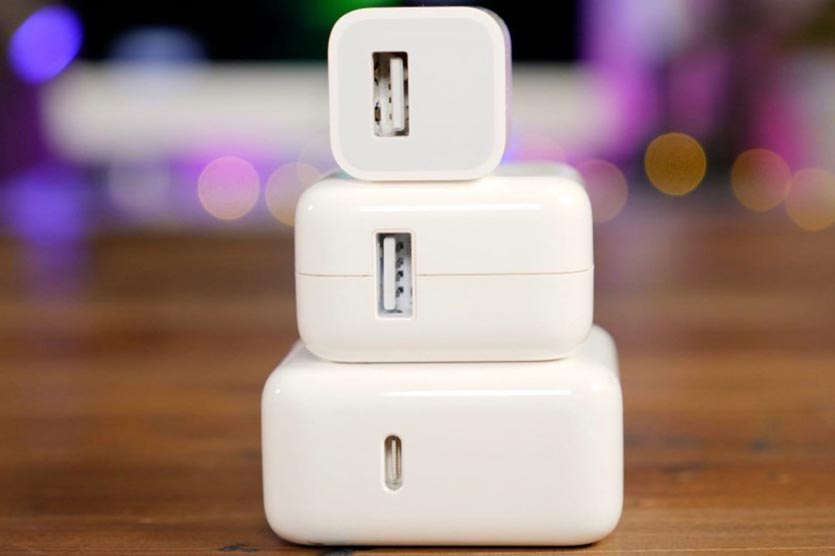
В модельном ряду блоков питания Apple присутствуют зарядки с максимальной мощностью до 96 Вт. Правда стоят такие аксессуары недешево, самая навороченная модели обойдется в 7900 руб. При этом никакого выигрыша по сравнению с 20-ваттной зарядкой при подпитке батареи iPhone вы не получите. Это уже давно доказали на практике.
В любом случае адаптеры Apple являются достаточно крупными и громоздкими, а еще не имеют второго порта для одновременной зарядки двух подключенных устройств. Размер блоков напрямую обусловлен уже не самой перспективной технологией на рынке, но такие адаптеры кладут в комплект все производители электроники.
Альтернатива современным зарядкам уже существует
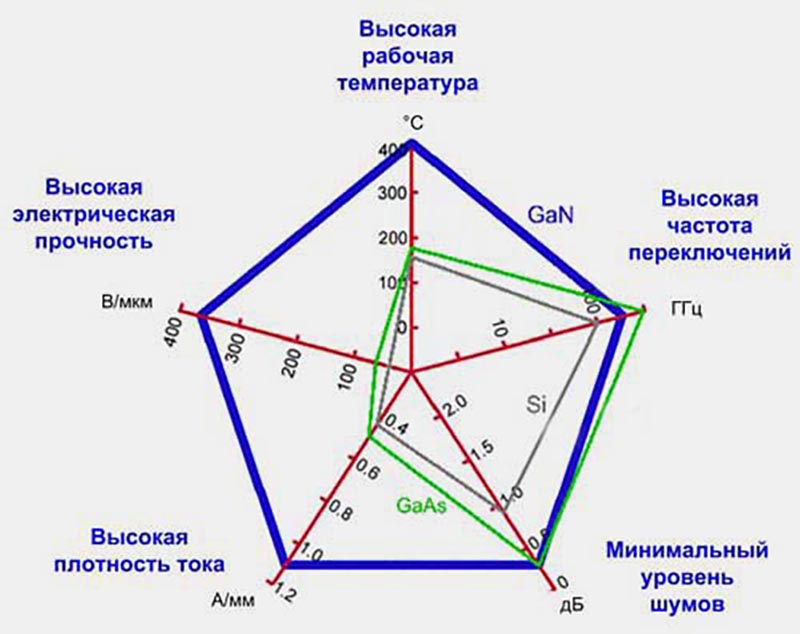 Сравнение параметров приборов на основе нитрида галлия (синий), кремния (серый) и арсенида галлия (зеленый)
Основой для всей современной микроэлектроники является кремний. Этот неметаллический элемент является вторым по распространенности на нашей планете после кислорода, но в чистом виде встречается крайне редко.
Благодаря своим свойствам кремний используется при производстве многих смесей, соединений и сложных элементов. Низкое сопротивление и хорошая проводимость тока позволяют кремнию занимать позицию главного полупроводника на Земле. Элемент несложно добывать, ученые давно привыкли работать с ним и могут создавать из кремния упорядоченные кристаллы. С этим элементом человечество успешно взаимодействует почти 200 лет.
Кремний на данный момент плотно интегрирован в область производства и эксплуатации электроники, но ему на пятки уже наступает нитрид галлия (GaN). На данный момент он более сложен в производстве и менее изучен. Перспективное соединение обладает лучшей электропроводностью, но первый транзистор на основе нитрида галлия удалось создать лишь в 2008 году.
Уже сейчас устройства на основе GaN выдерживают более высокое напряжение и проводят ток с большей скоростью, чем аналоги на основе кремния. Самым наглядным для потребителя примером применения нитрида галлия являются GaN зарядки для мобильной электроники.
Устройства являются более компактными при одинаковых показателях мощности, лучше выдерживают нагрев до высоких температур и являются более долговечными. Так транзисторы на основе GaN с легкостью выдерживают нагрев до 300°C, в то же время аналогичные компоненты на основе кремния с трудом переживут температуру в районе 100°C.
Кстати, этот же материал уже широко применяется в фотонике. Нитрид галлия, например, лежит в основе технологии чтения и записи Blu-ray дисков, применяется для создания миниатюрных лазерных лучей и микроскопов нового поколения.
Что мы получим с переходом на GaN
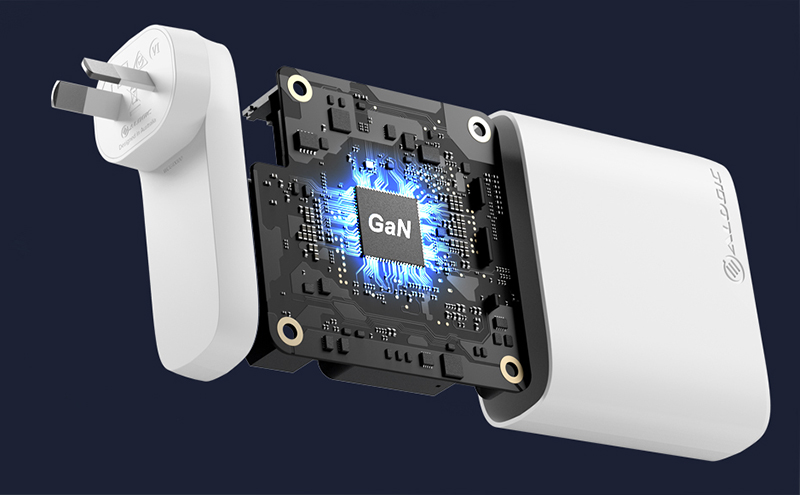
Если подытожить основные преимущества применения нитрида галлия по сравнению с кремнием применительно к зарядным устройствам, то получим следующие бонусы:
► работа в более высоком температурном диапазоне, а значит – нет нужды в массивном охлаждении;
► напряжение пробоя у GaN-транзисторов в несколько раз выше, чем у кремниевых, это обеспечит лучшую защиту компонентов и самого устройства;
► сопротивление у элементов из нитрида галлия ниже, чем у кремниевых;
► время переключения GaN-транзисторов почти в 10 раз быстрее, чем у кремниевых.
Все это уже сейчас позволяет создавать более компактные и при этом более эффективные зарядные устройства для мобильных гаджетов на основе GaN.
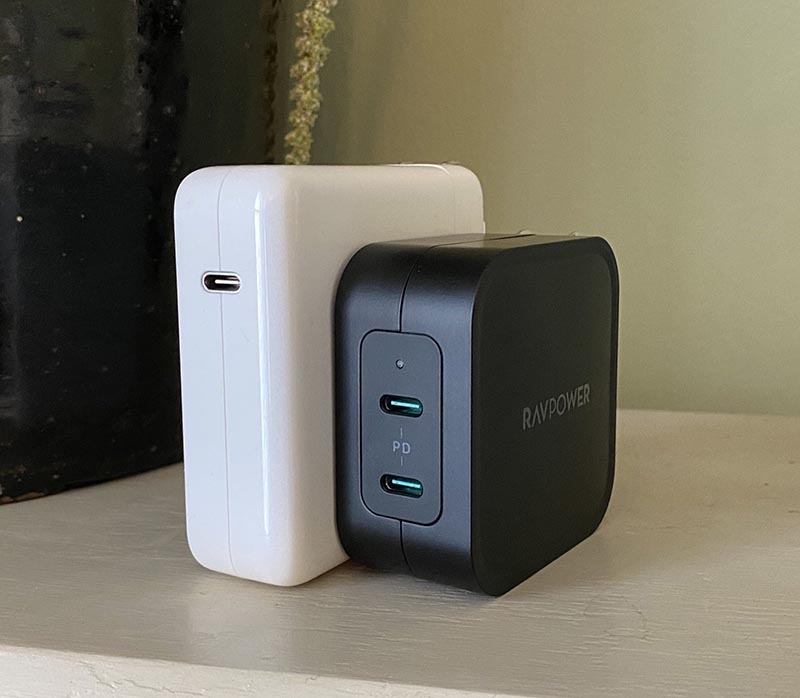
Для примера, сравните три практически равные по мощности зарядки:
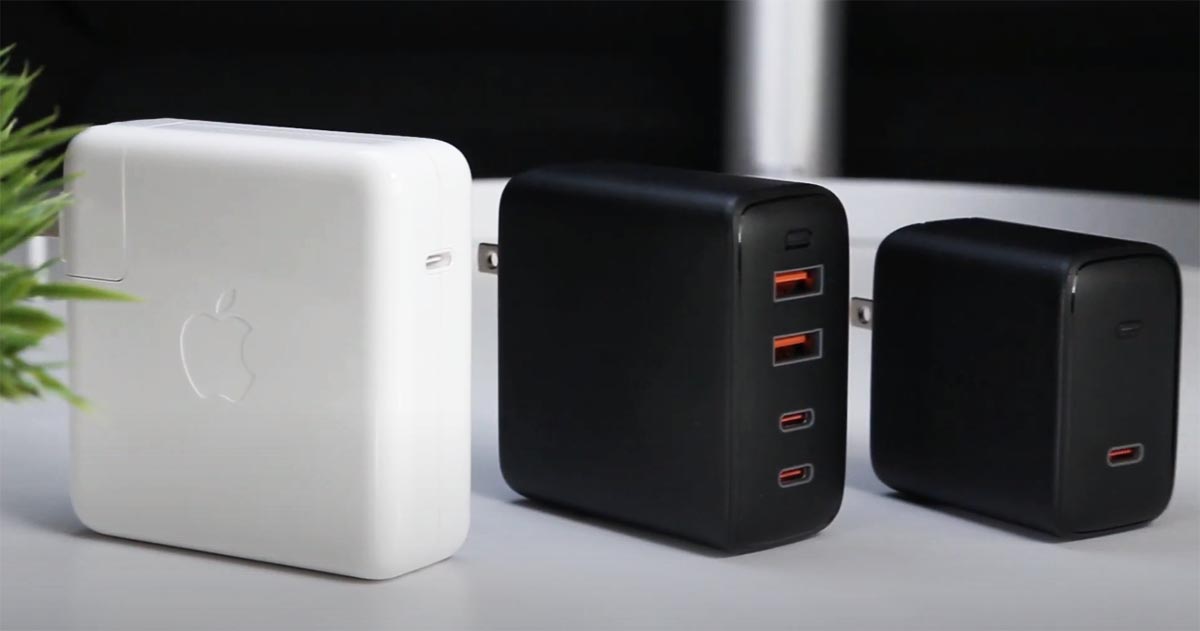
◈ Слева расположен самый мощный блок питания в линейке Apple – зарядка для 16-дюймового Macbook Pro мощностью 96 Вт. Он оснащен всего одним портом Type-С, зарядить два гаджета одновременно не получится.
◈ Далее располагается 100-ваттный блок питания GaN, в котором имеется не один, а сразу четыре порта. Два Type-С с поддержкой Power Delivery и еще пара USB-A портов 5В 2.4А каждый.
◈ Самый маленький блок справа это еще одна GaN-зарядка на 100 Вт, но с таким же единственным портом, как в блоке питания Apple. Размеры и цена на оба адаптера стороннего производителя примерно в 1.5-2 раза ниже, чем у яблочного аксессуара.
Пользователь либо получит более компактное зарядное устройство с богатым набором разъемов либо в два раза меньший блок питания с тем же набором портов, что и у Apple. Это касается не только мощных блоков на 100 Вт, но и более простых адаптеров питания.
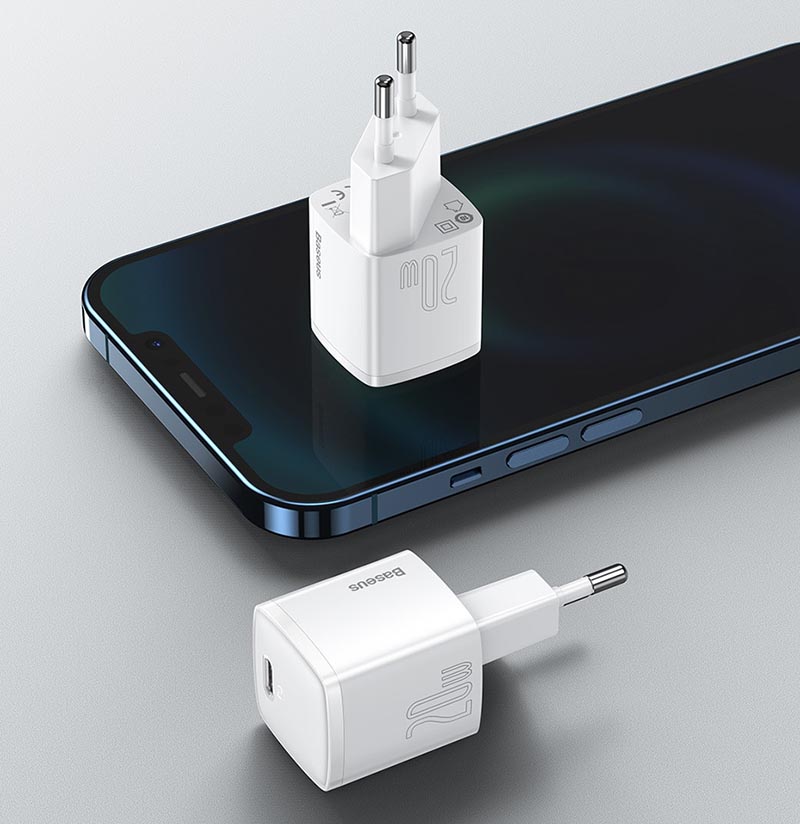
Так выглядит самый компактный зарядник из линейки GaN от Baseus. Он заменит адаптер питания из комплекта iPhone 11 Pro или актуальных iPad. Мощность блока питания 20 Вт, а размеры при этом составляют 30х30х71 мм.
Параметры выходного Type-С разъема: 5V/3A, 9В/2A, 9В/2.2A, 12V/1.67A, 15V/1.3A.
◉ Купить Зарядное устройство Baseus Type-C 20 Вт – от 907 руб.
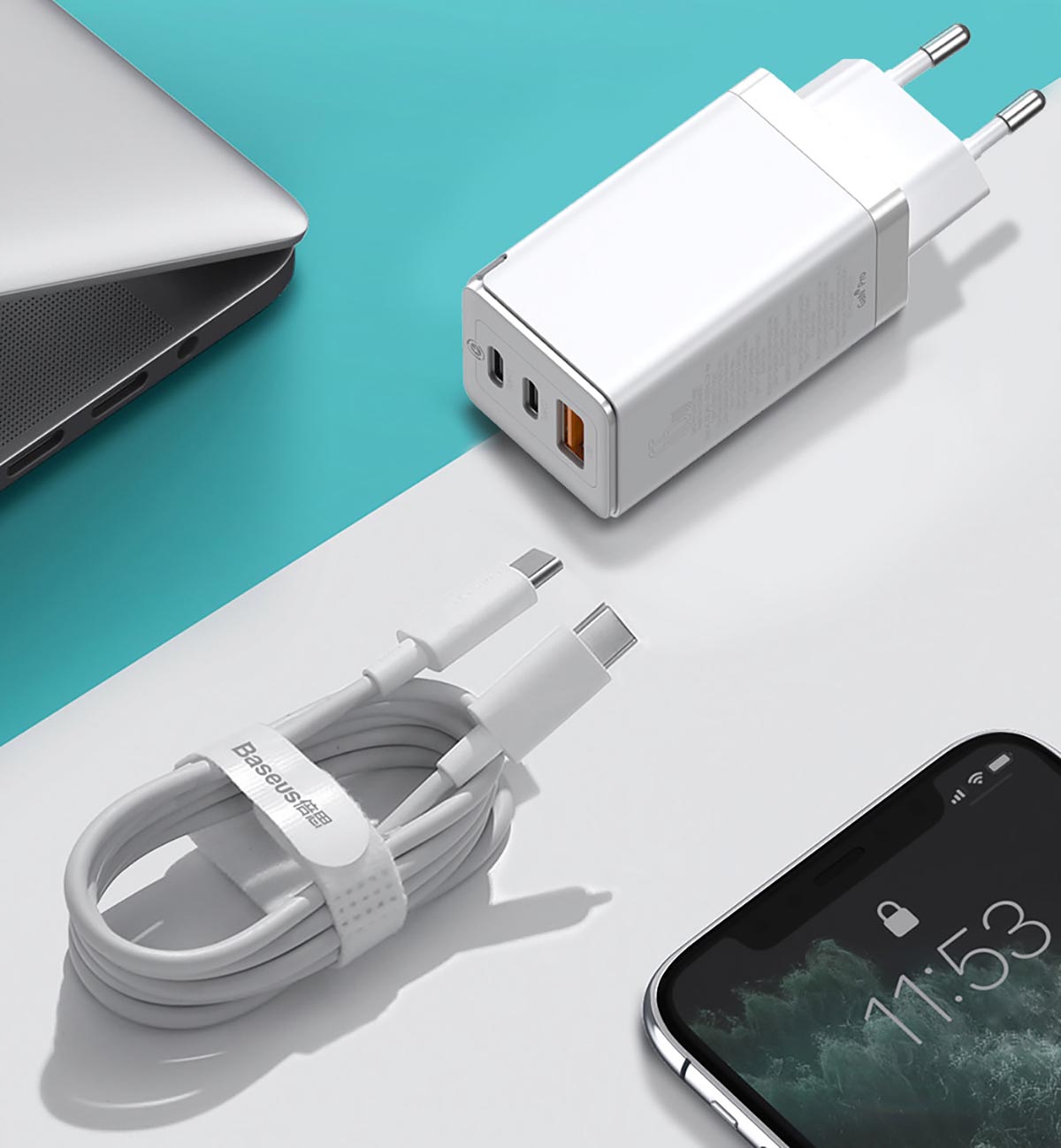
А это уже более мощная зарядка на 65 Вт. Любопытно, что размеры блока питания всего на несколько миллиметров больше предыдущего и составляют 30х35х100 мм.
Этот блок питания комплектуется одним портом Type-A и одним или парой мощных Type-C. Последние обладают такими параметрами: 5V/3A, 9V/3A, 12V/3A, 15V/3A, 20V/3.25A. Получится подпитать не только iPhone и iPad, но и зарядить батарею MacBook.
◉ Купить Зарядное устройство Baseus Type-C 65 Вт: от 2037 руб.
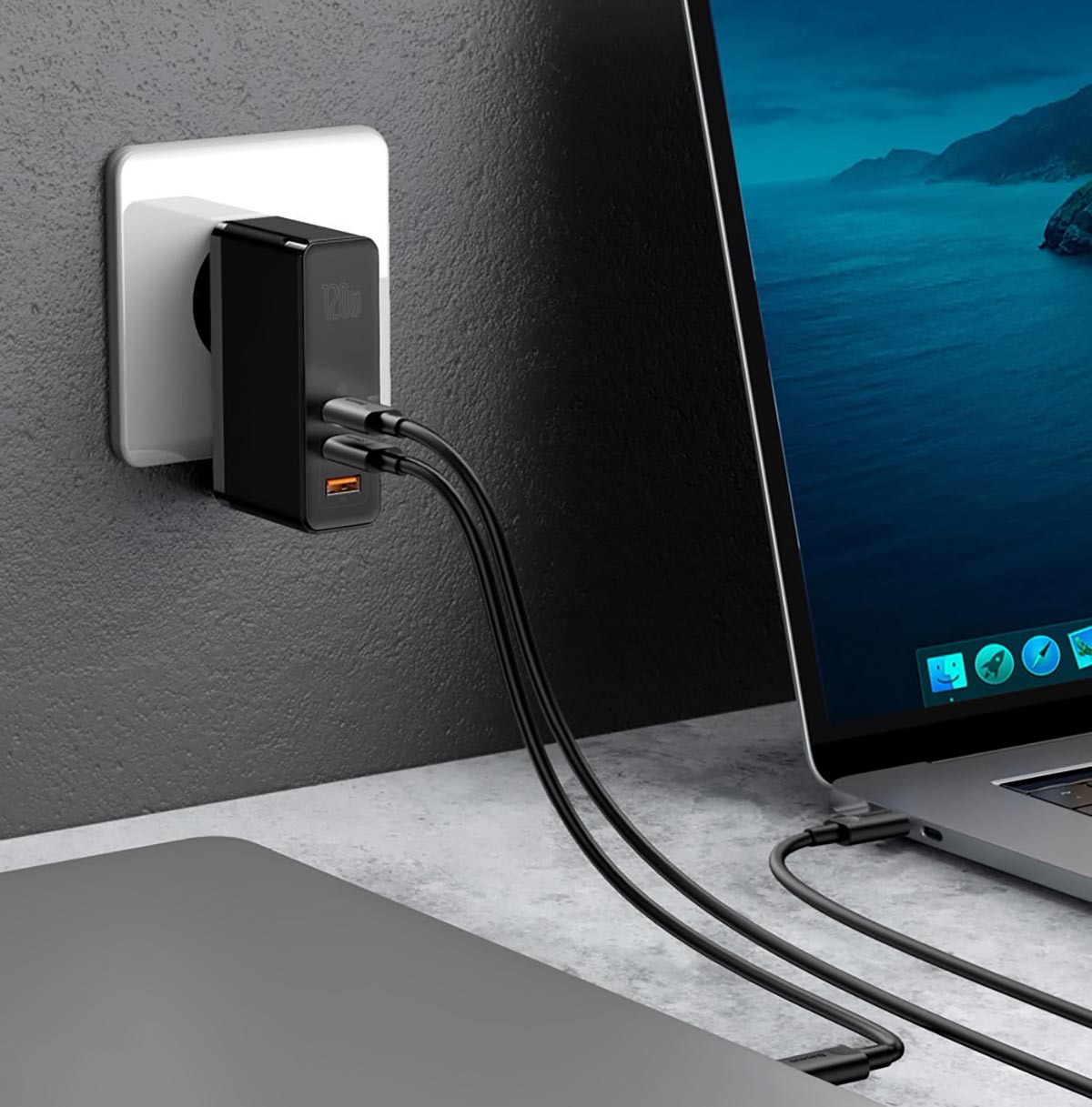
Это одно из самых мощных решений на рынке – GaN зарядка на 120 Вт. Здесь тоже пара портов Type-C с такими параметрами выхода: 3,3-20V/5A, 5V/3A, 9В/3A, 12V/3A, 15V/3A, 20V/5A. От такого зарядника можно одновременно подпитывать пару 13-дюймовых моделей MacBook или заряжать сразу 16-дюймовый MacBook Pro и любой iPad.
Габариты зарядки при этом составляют 95х55х30 мм, что заметно меньше блока питания Apple на 96 Вт.
◉ Купить Зарядное устройство Baseus Type-C 120 Вт: от 3482 руб.
В арсенале Baseus и других производителей есть большое количество аналогичных моделей с разным набором портов и любой нужной мощности.
Все описанные модели поддерживают стандарты быстрой зарядки Power Delivery и Quick Charge. Это самые распространенные протоколы, которы подойдут как для техники Apple, так и для гаджетов других производителей.
Какую GaN-зарядку выбрал для себя
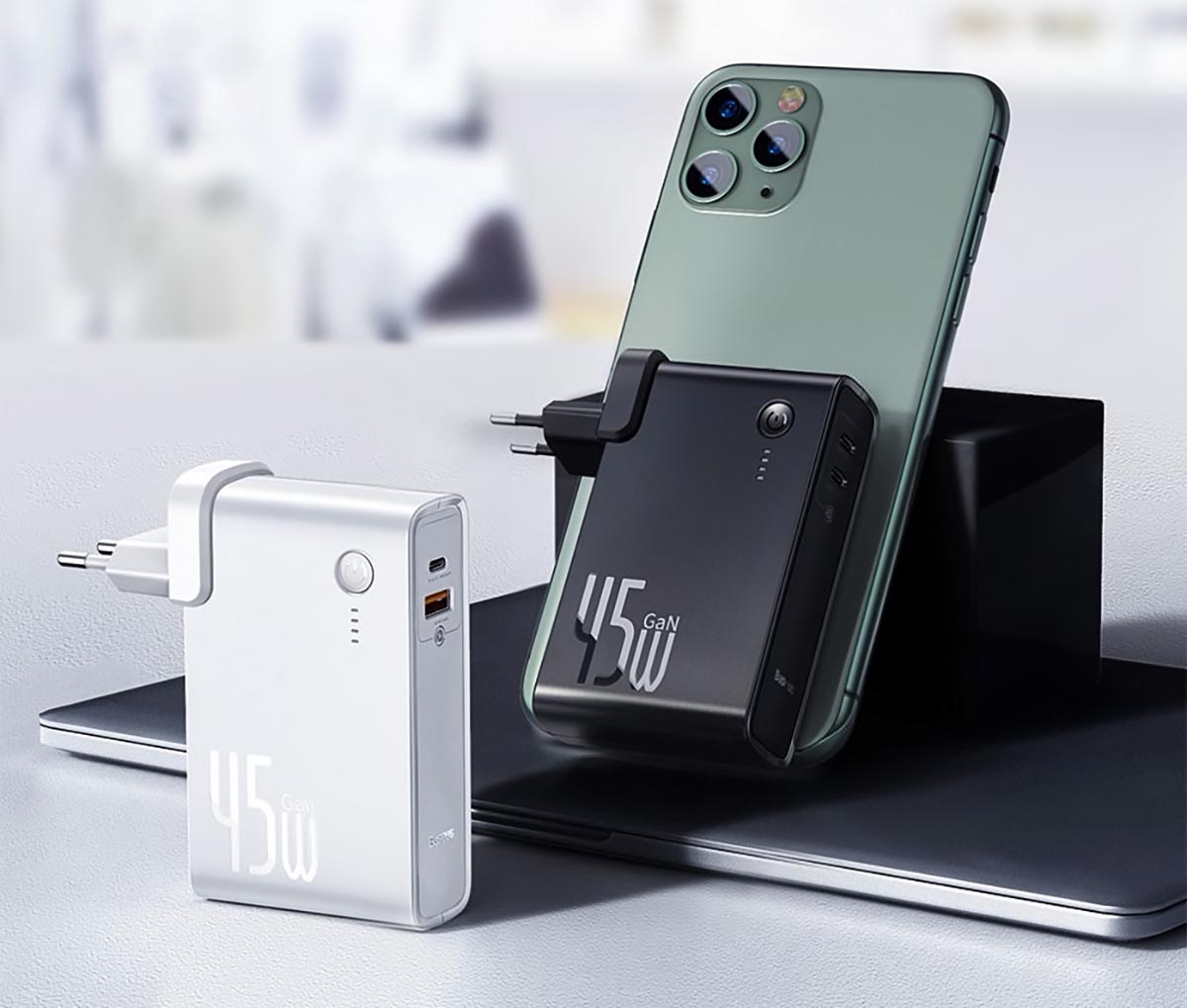
Сам уже полгода пользуюсь другой моделью от Baseus. Это мощное зарядное устройство на 45 Вт и PowerBank – два в одном.
Практически каждый день оказываюсь у дивана или кровати с разряженным смартфоном. Розетка находится далековато и на помощь приходит старенький PowerBank от Xiaomi. Устройство несколько лет исправно выполняет свои обязанности и не думает уходить на покой. При этом “банка” больше iPhone, в несколько раз толще и тяжелее смартфона.
Главный недостаток такого устройства – примерно раз в неделю оно оказывается полностью разряженным, а затем всю ночь пополняет запас энергии. То я, то жена регулярно забываем вовремя подключить PowerBank к розетке.
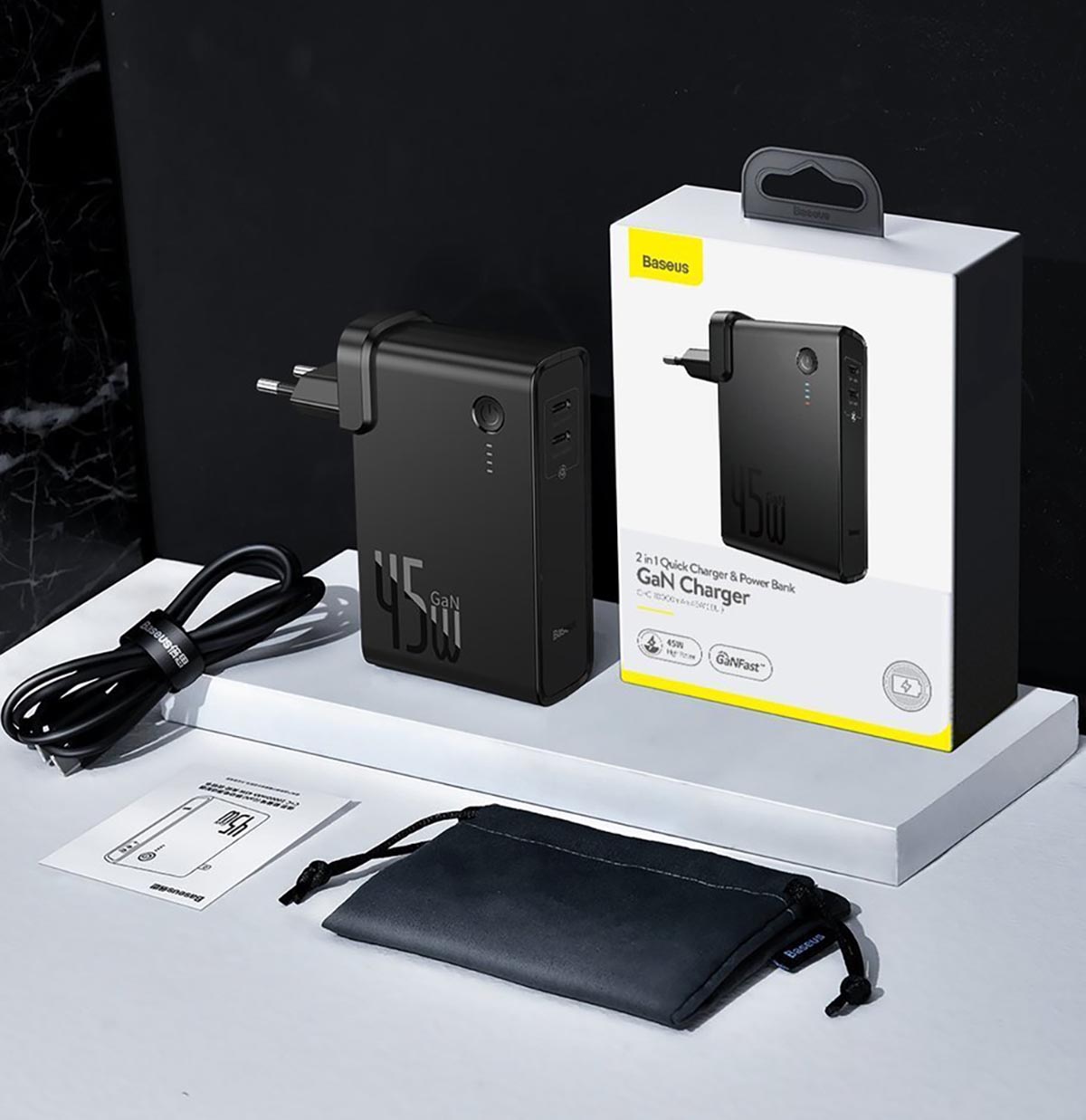
С новым аппаратом от Baseus таких проблем не возникает. Устройство постоянно подключено к сети и выполняет роль зарядки, а при необходимости отключается от розетки и превращается в переносной PowerBank. Его можно взять с собой на диван или бросить в сумку при выходе из дома, гаджет при этом всегда будет полностью заряжено и готово к работе.
Емкость встроенного аккумулятора составляет 10 000 мАч, этого хватит на 4-5 зарядок смартфона, в зависимости от модели. Если раньше приходилось регулярно помнить о зарядке PowerBank, то сейчас этой проблемы нет совсем.
◉ Купить Зарядное устройство Baseus Type-C 45 Вт 10000 мАч: от 2973 руб.
Вот такие перспективные и прогрессивные разработки уже существуют на рынке потребительской электроники.
Остается ждать, пока подобные блоки питания будут производить и продавать купертиновцы. Только представьте, как бы здорово смотрелся мощный адаптер на 120 Вт в комплекте с MacBook, от которого можно заряжать три или четыре гаджета одновременно.
В закладки
GaN VS Normal Battery Charger: See How They Differ

More recently, as more and more battery chargers made from gallium nitride emerge and enter into the power charging market, the new charging technology GaN charger is rising to fame.
In 2018, GaN chargers like Anker, Aukey and RAVpower were firstly put into the market as the GaN was initially adopted into the power charging space. Then the GaN charging tech is gaining attention day by day as the third-party manufacturers introduce their GaN chargers.
Since more and more GaN chargers are on the way, many people are starting to compare them with the traditional and normal battery chargers. Indeed, as a kind of brand-new charging gadget, the GaN charger will inevitably be compared to the normal battery charger which has been regularly the best solution for power charging for years.
Don’t fret if you cannot find any differences between the GaN charger and the normal battery charger. This article is going to explore how the two types of battery chargers differ as well as pointing out whether the GaN battery charger can replace the normal one currently. Don’t miss.
Also Read:
GaN Charger VS Normal Battery Charger: What Are the Differences
The GaN charger and the normal battery charger have similarity in some ways. They are both for power charging as well as for power delivery (PD). However, their differences are much more significant. Let’s explore how they differ.
Component
The key difference between the two types of battery chargers lies in their made-of components. For years, the normal battery chargers we regularly use for our smartphones, laptops and computers are silicon-based. That said, they rest in the built-in silicon-only power management integrated circuits (Power ICs).
Instead, the GaN charger innovatively uses the built-in gallium nitride chip which is made of gallium nitride, the new semiconductor material alternative.
When it comes to the difference between the two kinds of components, actually it all depends on their bandgap (All semiconductor materials have what is called a “bandgap”). Bandgap describes how easy the current can pass through a solid semiconducting material. The thumb rule is the wider the bandgap, the higher the electron mobility and power frequency.
The GaN material the GaN charger utilizes is a kind of compound semiconductor which has a wide bandgap of 3.4 eV (WBG). Compared with the GaN’s 3.4 eV, the silicon semiconducting material built in the normal battery charger only has a 1.12 eV bandgap. Therefore, the GaN battery chargers can sustain far higher voltage as well as far higher power density than the silicon-based ones.
If observe carefully, you can easily find that the vast majority of the released GaN chargers have USB C ports, the next generation of USB 3.0. And unlike the normal battery chargers which always only have one Micro USB port or one USB port or one lightning port, the GaN chargers always have multiple USB C ports.
In terms of charging ports, the GaN charger takes advantage of the USB C ports in many aspects compared with the normal battery charger. On the one hand, coupled with the data cable, the GaN charger using the USB C ports can achieve fast charging speed of up to 10Gps and higher power density of up to 100W.
On the other hand, the vast majority of GaN chargers take advantage of multiple USB C ports or USB C plus USB A ports to allow for fast charge of multiple devices at the same time.
In short, in terms of charging ports, compared with the normal battery charger, the GaN charger is powered with higher versatility as well as flexibility.
Charging Speed & Power Efficiency
The difference in built-in components, in fact, determines the critical difference between the two types of battery chargers — difference in charging speed as well as in power efficiency.
As mentioned earlier, this all depends on their difference in bandgap width. The silicon semiconducting material used in the normal battery charger has very narrow bandgap and is gradually reaching its physical limits, leading to the incapability of handling high voltages, high power density as well as achieving fast charging.
However, in the case of the GaN utilized in the chip of the GaN charger, it owns much wider bandgap than silicon, which means it is capable of conducting far higher voltages and handling much more power over time.
The GaN charger has been shown to be capable of transmitting electrons with 1000 times the efficiency of the battery charger using silicon material. Therefore, it’s able to achieve faster charging with high power efficiency. This is what makes the GaN charger stand head and shoulders in the charging battle.
In terms of overall size, it’s definitely the GaN charger in much smaller size that wins the battle.
Nowadays, as the demand for fast charging grows increasingly, in order to achieve faster current input/output, companies have to pull out the normal silicon-based battery chargers with higher power such as 30W, 40W and even 60W at the expense of tiny size. That being said, the higher the power, the larger the silicon charger. The more bulky the charger, the harder the charger to be carried around.
By contrast, after moving to the GaN charger, carrying around a tiny charging footprint in your backpack or handbag for fast charging your mobile phone or laptop on the go with ease isn’t just a daydream anymore. The high power density of the GaN components in the GaN battery charger allows for more power to be switched, thus making the charger to be made more compact.
Simply put, compared with the normal battery charger, the GaN charger allows for shifting more power for faster charging while still maintaining its overall size to be smaller.
Power Dissipation and Heat Produced During Charging
In addition to the differences in charging speed as well as overall size, the difference in bandgap between the components of the two types of battery chargers also determines their difference in power dissipation and charging temperature.
In the case of the normal battery chargers using silicon components, they have been, in fact, being designed in more sizeable volume in order to satisfy the need of fast charging. However, this is at the expense of less power dissipation, causing potential risks of troublesome issues such as overheating, overcharging as well as short-circuiting.
In the flipping side, the bandgap efficiency of the GaN components in the GaN charger brings up minimal power dissipation. This is because the GaN charger using GaN components with wider bandgap is more efficient in power delivering, making less power remain in the charger and less heat be dissipated.
That said, compared with the normal battery charger, the GaN charger is capable of ensuring cooler charging and in turn preventing overheating and overcharging issues to safeguard the devices being charged.
Currently, Can the GaN Charger Replace the Normal Silicon-based Battery Charger
From the above comparison of the two types of battery chargers, it’s manifest that the GaN charger in a smaller size outperforms the normal battery charger in many aspects like fast charging speed, high power efficiency as well as great thermal efficiency. Moreover, there is no denying that the GaN charging tech is rising to popularity increasingly.
But does it really mean that the GaN charger can knock out and replace the normal battery charger made of silicon components right now? Well, the answer is No, currently. Actually, the reasons are all about the supply and cost of the GaN charger (Money, in fact).
For the moment, the GaN charger is still in its infancy for commercialization with no large scale production (short supply), leading to much higher price than that of the normal battery charger. The reason why not many charger manufacturers have the incentive to switch to produce GaN chargers currently rests in the complexity of manufacturing the GaN components.
In order to gain the compound GaN, the original gas GaN needs to be compounded by completely relying on the complex artificial synthesis which requires sophisticated equipment and techniques, leading to high manufacturing cost. High manufacturing cost leads to high prices of GaN chips, which makes less semiconductor vendors produce chips made of GaN.
Moreover, while only a few semiconductor fabricators produce and provide GaN components, for the moment, there aren’t a great number of GaN chargers being produced and entering into the market. And they cannot be at reasonable prices until they become cost-effective in large-scale production.
However, when it comes to the normal battery chargers, they have been regularly the best solution for power charging for years with stable and reasonable supply and cost. After all, the silicon components are easily and stably manufactured by semiconductor vendors in large scale during well-established processes, leading to reasonably cheap prices.
Simply put, currently, the GaN charger cannot replace the normal battery charger which has been the best option for power charge for years.
Final Words
GaN charger, as the new charging technology, has risen to fame in the power charging field. Indeed, with the advantages of delivering faster charging speed, offering higher power efficiency as well as reducing heat dissipation in small yet mighty size, it is gradually becoming a strong rival against the normal battery chargers.
Currently, due to the unreasonable supply and cost, the GaN charger cannot replace the normal battery chargers. Nevertheless, it’s definitely the way to go since it’s being integrated into flagship devices as well as power banks. In the coming years, when the supply and the cost become reasonable, it’s likely to replace the normal battery chargers and become the mainstream.